Intro
This is not my work, it’s the introduction to a larger, but not too much larger, paper on the differences in design between Single Ended Triode amps and PushPull amps. I always thought it was funny and I have lost the document once or twice so I wanted to put the initial part here so it’d be easy to find again. Plus I saved the actual file here on the server for you to download if you’d like.
The original article was written by Eddie Vaughn, clicking the link above will download the PDF for you, and most of these photos are from Glow in the Dark Audio. Just putting it here as a fan of the amps, photos, writing, just the whole thing ya know?
The Debate of the Century
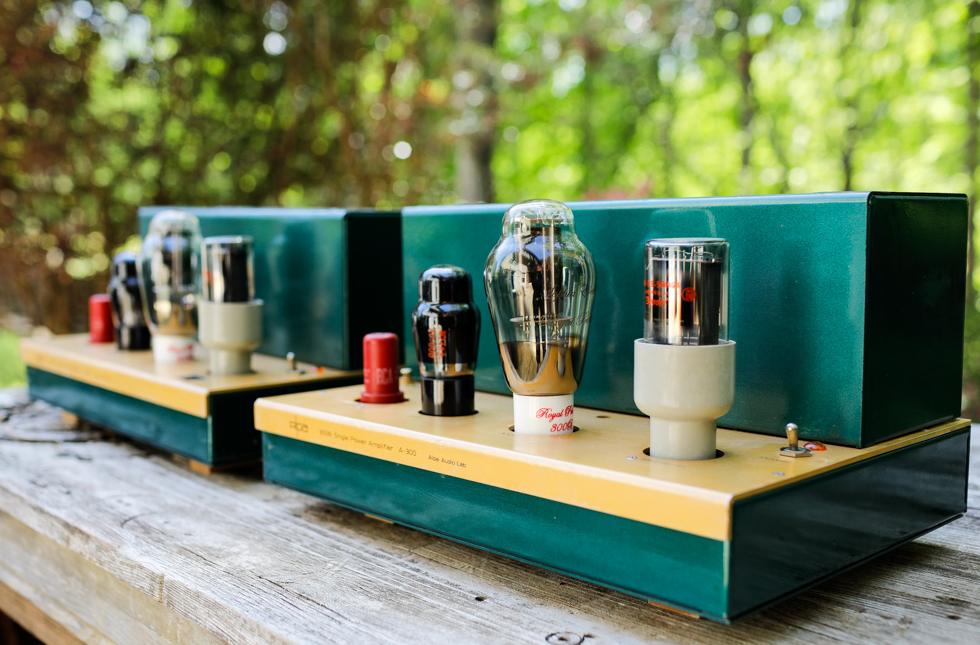
If you’re familiar with tube amplifiers, you know that the two major methods of power stage operation are single ended (SE) and push pull (PP). As with so many things in life, most people are highly opinionated when it comes to these two choices. While any confrontations between the two camps are less likely to end with blood spilled on the floor than say, vinyl versus digital or tube versus solid state (proponents of SE and PP are, after all, still “brothers in tubes”), their clashes can nevertheless be- come a bit heated at times. The real danger here exists to that poor, well-meaning soul who enters into the discus- sion and tries to play the peacemaker by extolling the virtues of each method and proclaiming them equals, which is the “raw nerve” for both camps. When this hap- pens, you’ll usually see Camp SE and Camp PP rise up in unison, beat him like a rented mule and toss his limp, lifeless body aside as fodder for the vultures, and then resume hostilities as usual betwixt themselves.
Yes, even among the brethren of The Brotherhood Of The Firebottle, there are many schisms. Paper in oil caps ver- sus plastic film caps. Vintage carbon composition resis- tors versus fancy metal foils and metal films. Vintage amp designs versus modern amp designs. Grid bias ver- sus cathode bias. And then there are various, very ada- mant “splinter groups.” Here, you’ll find the “Power Mongers” branch of the Brotherhood. The Power Mon- gers drive their gargantuan speakers with behemoth de- vices that give off an infrared heat signature detectable by satellites, and more closely resemble 800 megawatt nuclear reactors than tube amps. No “girlie man” amps for them! Sadly, many Power Mongers wind up in jail, after finally getting busted for the racketeering and smuggling operations they had operated in order to pay their electric bills.
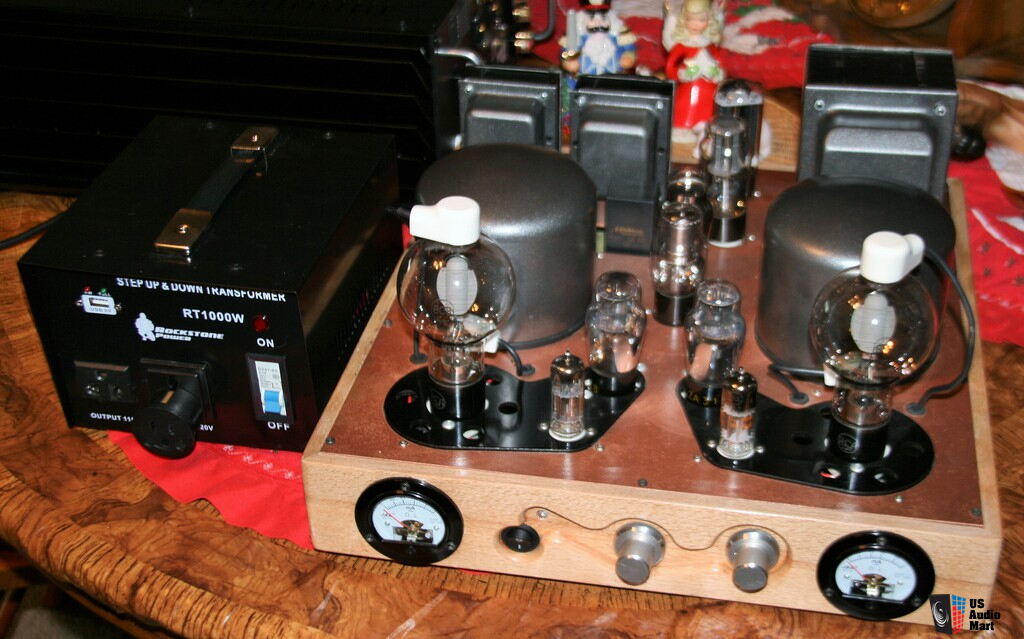 Then, there are the Old Timers, those easy going, laid
back fellows who love to enjoy their music with the
“warm and fuzzy” sounds of the bygone Golden Era of
Hi-Fi. Old Timer is not an age, it’s a mindset. They are
some pretty young Old Timers out there, who have usu-
ally been accepted into the Brotherhood under the wing
of an older Old Timer. Every bit as dedicated as the other
splinter groups, Old Timers would rather have their Eico
HF-87 than a free lifetime membership in the Ferrari of
the Month Club and a date with Norah Jones. Life is
good.
Then, there are the Old Timers, those easy going, laid
back fellows who love to enjoy their music with the
“warm and fuzzy” sounds of the bygone Golden Era of
Hi-Fi. Old Timer is not an age, it’s a mindset. They are
some pretty young Old Timers out there, who have usu-
ally been accepted into the Brotherhood under the wing
of an older Old Timer. Every bit as dedicated as the other
splinter groups, Old Timers would rather have their Eico
HF-87 than a free lifetime membership in the Ferrari of
the Month Club and a date with Norah Jones. Life is
good.
Finally, there is the most hardcore sect of the entire Brotherhood, The Triode Junkies, which is further divided into the Transmitter Triode Vikings, the DHT Dandys, the Sweep Tube Ninjas, and the fractional-watt Spudmeis- ters.
Transmitter Triode Vikings are those aggressive individu- als who want to crank it to SPLs that give you a nose- bleed, but want to do so with class and finesse. Their way is an iron fist in a velvet glove. They differ from the Power Mongers in that they posess a seething dislike for push pull. As a matter of fact, some Transmitter Triode Vikings began life as Power Mongers, but were lured by the seductive sounds of SET, and became Triode Junkies. They do however still retain some of their old Power Monger ways, and 2 watts just won’t cut it for them. Their quest for single ended finesse along with enough power to arc weld often drives them to the brink of madness. They do not at all mind the fact that there is nothing more than a thin ceramic cap standing between them and 1500 volts, neither do they mind a level of radiated heat that would leave even Power Mongers reaching for an asbestos suit.
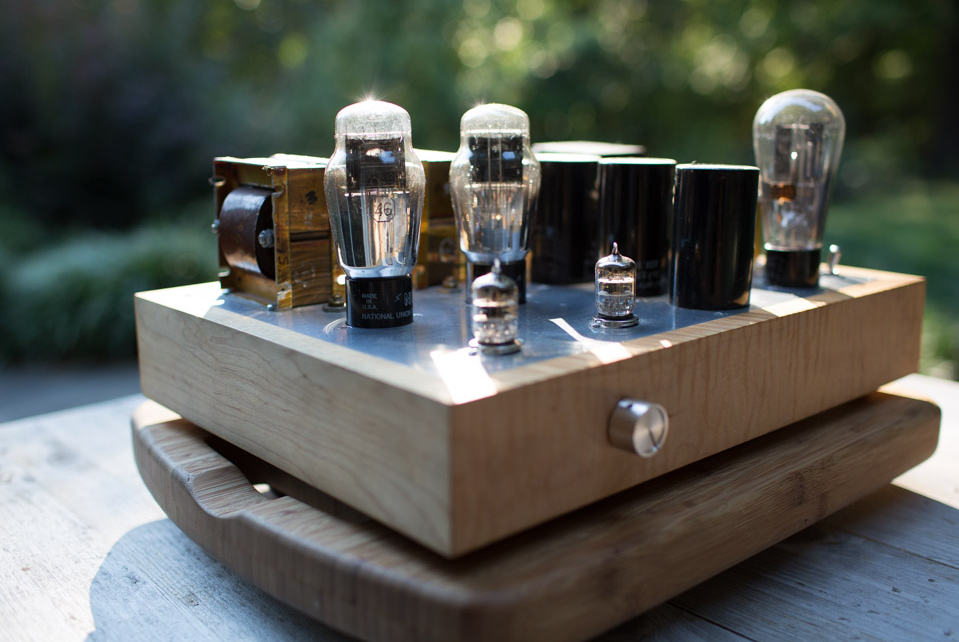 The DHT Dandys are a crew of refined tastes, who enjoy
the finer things in life. They mate their Avantgardes with
their $35,000 monoblocks via speaker cables that cost
more than the yearly Gross Domestic Product of most
developing nations. If invited to their home for a listen to
their system, you’ll find most of them to be very hospita-
ble and civil gentleman, with all the prim and proper
ways of a British butler. Alas, there is the occasional
DHT Dandy who can be a bit snobbish about the fact
they spent more on their stereo than you did your house,
but most are true gentlemen who simply love music.
However, the situation can deteriorate very quickly if
you mention that your favorite amplifier does not con-
tain a DHT power tube, leading you to be escorted from
the premises by some very scary looking bodyguards
with large bulges under the torsos of their suits. So
please, keep your opinions to yourself, be quick to com-
pliment their system, and even if you do not like the cav-
iar and truffles they offer you, pretend to like them any-
way.
The DHT Dandys are a crew of refined tastes, who enjoy
the finer things in life. They mate their Avantgardes with
their $35,000 monoblocks via speaker cables that cost
more than the yearly Gross Domestic Product of most
developing nations. If invited to their home for a listen to
their system, you’ll find most of them to be very hospita-
ble and civil gentleman, with all the prim and proper
ways of a British butler. Alas, there is the occasional
DHT Dandy who can be a bit snobbish about the fact
they spent more on their stereo than you did your house,
but most are true gentlemen who simply love music.
However, the situation can deteriorate very quickly if
you mention that your favorite amplifier does not con-
tain a DHT power tube, leading you to be escorted from
the premises by some very scary looking bodyguards
with large bulges under the torsos of their suits. So
please, keep your opinions to yourself, be quick to com-
pliment their system, and even if you do not like the cav-
iar and truffles they offer you, pretend to like them any-
way.
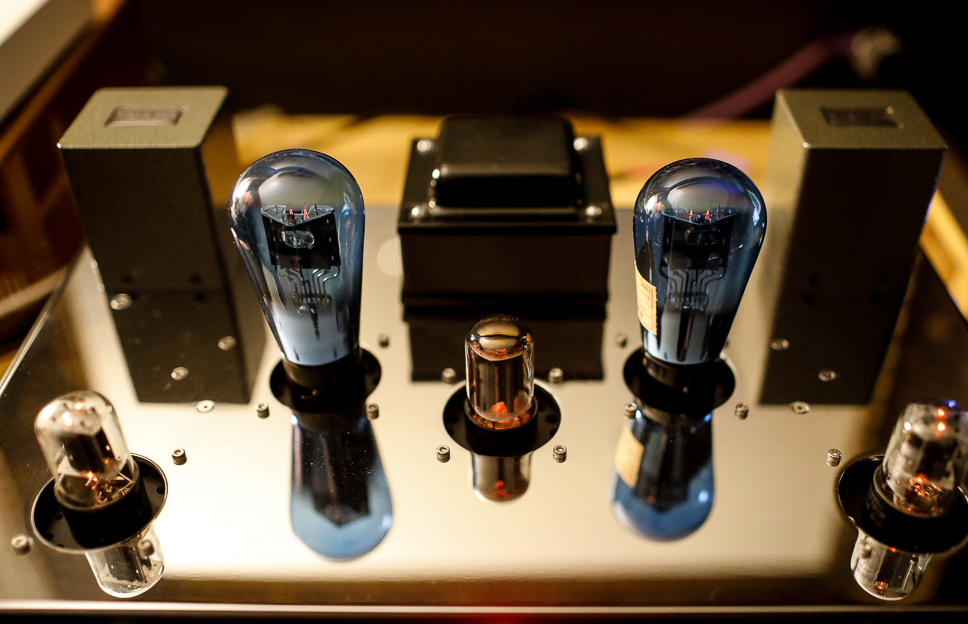
Sweep Tube Ninjas are “the thinking man’s triode ad- dicts”. Cunning and crafty, with a million tricks up their sleeve, they are true to their namesake. Being the think- ers and doers thay they are, they can recite the pinout of every television vertical amplifier tube in existence from memory, and delight in building a chintzy looking amp for less than $250 (including $6 tubes) that will amaze and confound the DHT Dandys by it hanging with their $35,000 monoblocks. The Spudmeisters are a relatively young group that is small and unique, just like their amplifiers. Their com- mon bond is the spud (one tuber) amp. One resistor, one tube, and one output transformer in the signal path per channel, nothing else. Any more than that, and a Spud- Single Ended vs. Push Pull: The Fight of the Century by Eddie Vaughn meister will fall to the floor convulsing, ears covered, at the thought of putting anything extra in the signal path to contaminate the signal!
 Coupling capacitors are the ul-
timate statement of blasphemy to the Spudmeister.
Though they only have one scant watt on tap, they don’t
seem to mind. It’s all about quality, not quantity.
Various individuals within the rank and file of The Triode
Junkies belong to a dark, fierce, and shadowy sub-sect,
the Triode Zombies, who are the mindlessly dedicated
Dark Overlords of the Three Element Tube. People who
listen to pentode or ultralinear amps are no friends of
theirs and are not welcome in their home. Enough said.
Getting serious for a moment, there are two broad cate-
gories that all these sects fall into, whether you’re an
Old Timer or a Spudmeister. Those two categories are
Single Ended and Push Pull.
Coupling capacitors are the ul-
timate statement of blasphemy to the Spudmeister.
Though they only have one scant watt on tap, they don’t
seem to mind. It’s all about quality, not quantity.
Various individuals within the rank and file of The Triode
Junkies belong to a dark, fierce, and shadowy sub-sect,
the Triode Zombies, who are the mindlessly dedicated
Dark Overlords of the Three Element Tube. People who
listen to pentode or ultralinear amps are no friends of
theirs and are not welcome in their home. Enough said.
Getting serious for a moment, there are two broad cate-
gories that all these sects fall into, whether you’re an
Old Timer or a Spudmeister. Those two categories are
Single Ended and Push Pull.
Much has been written on how each works, but very little on their direct compari- son. So, in this article I’ll attempt to bring out the virtues and drawbacks of both single ended and push pull op- eration, lay them out side-by-side, and try to avoid rais- ing the ire of both Camp Push Pull and Camp Single Ended along the way. Enjoy. :^)